Posts
-
Breakout board for Anytone AT-D868UV external mic and speaker
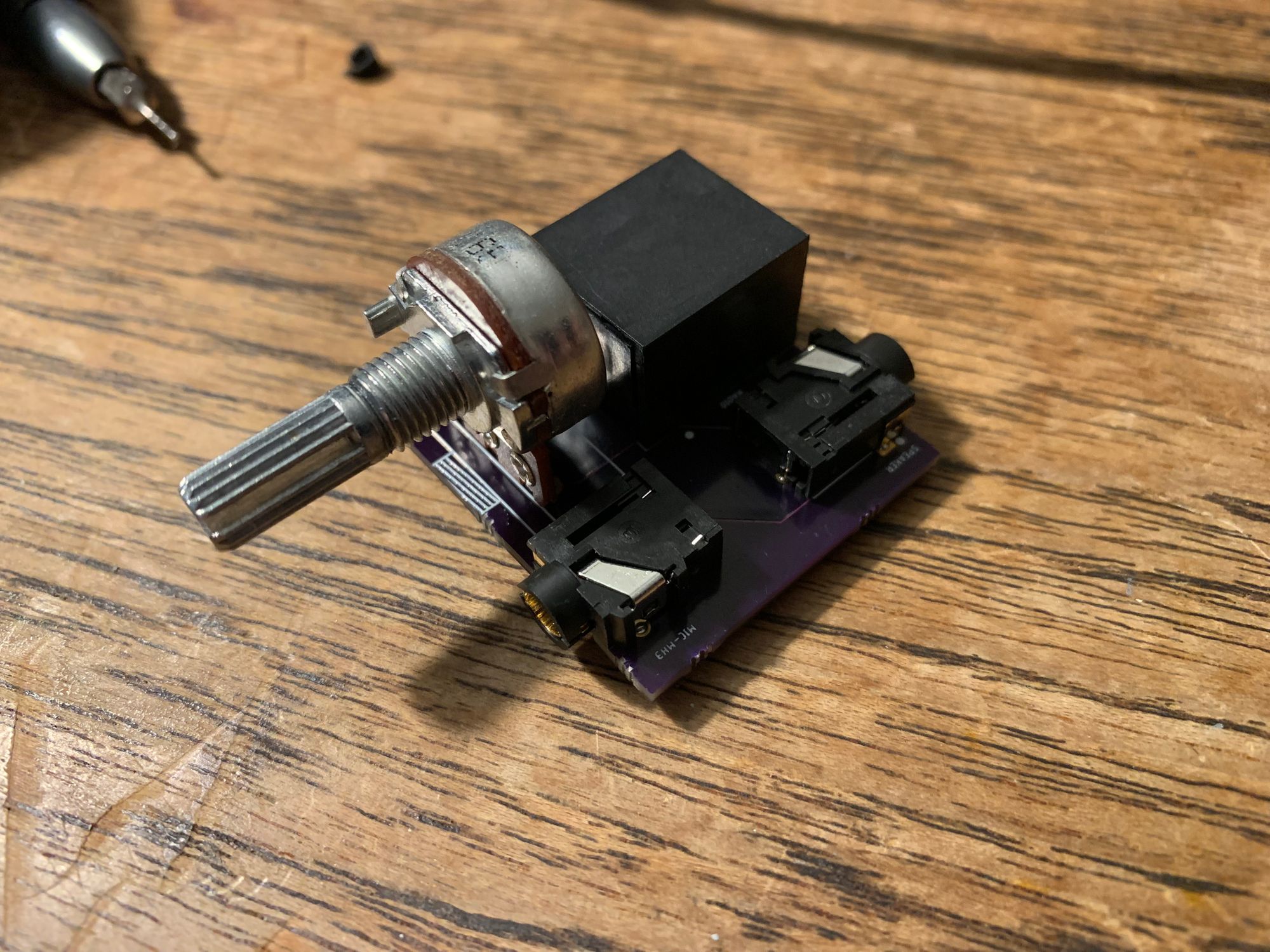
In the fall of 2018 I got a DMR radio, the Anytone AT-D868UV, for amateur radio use. Although it’s a rugged handheld radio, my primary use is at my desk in the home office.
-
Mustang: Rear Seatbelts

In the 1960‘s seatbelt laws were a relatively new thing.
-
First trip to the doctor

Just got the Mustang back this week from the shop. It had been there for the past two weeks. While I had dropped it off for what I had thought was going to routine clutch and transmission work – it didn’t quite turn out exactly that way.
-
Quadcopter

Back in May I picked up an AeroQuad Typhoon quadcopter kit at Maker Faire.
-
Rose the Mustang

I recently acquired a ‘65 Mustang convertible so you’ll start seeing things about it appear here.
-
Defcon 20 Badge Pin Layout
Last weekend I was in Las Vegas for Defcon 20. The badge for Defcon was electronic and included a fully hackable microprocessor, the Parallax Propeller. Towards the end of the convention they were selling extra badges – which I grabbed two spares to use as Propeller development boards.
-
VW Beetle Project Part 6
Recently I decided to re-upholster the seats in the Bug. Thus far I’ve made it through the two front seats. It’s been about 16+ hours of labor so far.
-
VW Beetle Project Part 5
I’ve accomplished a whole bunch of stuff over the past month on the Bug (but I haven’t had time to post about it).
-
VW Beetle Project Part 4
Today I finally solved the mystery of the gas fumes in the cabin. The gas smell seemed to be heavy in the trunk, where the gas tank sits. Looking around I realized a few things:
-
VW Beetle Project Part 3

-
MailWrangler 1.3.3 Release
MailWrangler for iPad 1.3.3 is now live in the App Store. Fixes include:
-
VW Beetle Project Part 2
As of tonight the overhead dome light is completely operable. Last week I was able to get the light turning “on” via the switch on the light. Turned out that some of the fuse and wire connectons were corroded and were failing at doing their job. Cleaned up the contact points (some by dumb luck by disconnecting and reconnecting, even). After all that I got the emergency flashers and the “on” switch for the light working. The door activation mode for the dome light still wasn’t working.
-
VW Beetle Project Part 1
This week I purchased a new (to me) old 1969 Volkswagen Beetle as a “project” car. To understand why we’ll go back in time a ways.
-
MailWrangler 1.3.1 Release
MailWrangler version 1.3.1 has been approved by Apple and is rolling out to the iPad App Store now. This version comes over a year after the last release of MailWrangler.
-
Teambox Chrome Notifier Version 0.8.1
Pushed out a new version of the Teambox Chrome Notifier tonight, bringing it to 0.8.1. Included in this release is:
-
Teambox Chrome Notifier release
I’ve recently started using Teambox both for my own projects and those at Apture. It is a great, lightweight tool for planning and tracking projects. It shows things in an “activity feed” which feels right at home for those of us that use Twitter and other similar things.
-
MailWrangler issues with multiple sign-in
At the moment there are issues with MailWrangler if you have multiple sign-in enabled on your accounts. I’ve begun investigating how best to work with their new system.
-
MailWrangler 1.2 & 1.2.1
This past week MailWrangler 1.2 went live in the App Store. This added a number of new features and fixed a slew of issues including:
-
MailWrangler 1.1 Released
After two weeks and a small issue causing the first build of 1.1 to get rejected – and it’s in the App Store. This version includes bug fixes and the ability to open links from GMail in a in-app browser. Grab your update/copy from the App Store today!
-
MailWrangler for iPad 1.0 Released
I’m happy to announce that Apple has approved MailWrangler for iPad 1.0 earlier today. It is now available in the App Store for $0.99.
-
MailWrangler; Take Two.
Not one to give up too easily, I’ve decided to try my hand again at releasing an application in the Apple App Store. This time I’m going for the iPad.
-
XMC now on github
In an effort to get all my projects out in to the wild, I’ve pushed the XMC project out to github to mirror CSH’s local git repository server.
-
MailWrangler Source Code on github
I’ve received a number of requests for the source code of MailWrangler over the past year. Recently I finally spent the time to prepare and post it to github. Sadly I was unable to actually import it from SVN due to the repository being corrupted and not having a complete backup. I simply imported my most recent checkout of the code in to git, and pushed that. Not my first choice, but it works.
-
A DHCP Server in PHP, why not?
The objective for the weekend was to get a server which could accept, decode, process and respond to DHCP requests on the network. My first goal wasn’t to build a robust server – really it was to learn something new and see if it could be reasonably done. After pretty much two days of solid work (Saturday and Sunday) I had a working server. It assigns the same IP to every machine that requests an IP – but I was able to get a PHP program to handle sockets and UDP packet parsing to read and write DHCP packets correctly. That was arguably the hard part. The rest is just standard application logic.
-
Development on a Mac: Textmate + bundles
With the start of my new job I finally got a Mac to use at work. I’ve been using one at home for going on two years, so it’s nice to finally use an OS I like at work. With this comes the need to use a good editor for development.
-
My Trip to CA Visualized
So last week I made the journey from Pittsburgh, PA to Foster City, CA via car. I’ve made this drive two other times, though the destinations were Mountain View and Sunnyvale. This time I ran the Instamapper GPS tracking app on my iPhone most of the way. This yielded 3,642 data points along the way with longitude, latitude, speed, heading, altitude, and a time stamp.
-
Another GitHub project: CSH's Drink Machine code
So the ecosystem is now complete. Until now we had CSH’s Drink code partially online. I’ve corrected this by moving from SVN to GitHub what I believe is the last bit of Drink’s code, the Java software running on the TINI boards in the machines themselves. For reference here’s all the GitHub projects:
-
MailWrangler inquiries and update
So lately I’ve been getting contacted a lot about MailWrangler. I have no idea why all of a sudden there’s renewed interest from users and journalists. I haven’t had time to respond to most people, sadly, but I’ll address some things here for everyone.
-
GitHub, JSCore & Touchscreens
So a couple of weeks ago I decided to finally get some of my code out to the world. I’ve recently gotten pretty excited about using git for version control. Of course, GitHub is awesome so I posted my code there. You can take a look at: github.com/adinardi.
-
Oh Solaris!
So since we CSH sys admins are getting rid of old stuff we’ve got laying around (anyone want a Sun E3000 server?) I grabbed one of the Sun Netra T1 150‘s we had. It’s a nice little machine (1U of solid metal) with a 440Mhz UltraSPARC-IIi processor and 1 Gig of RAM. So I figured what the hell, let’s install Solaris on this thing, it is a SPARC!
-
MailWrangler and the Apple App Store
So in July I wrote a small iPhone app called MailWrangler. Basically this app enabled a user to add their GMail accounts (standard and Google Apps For Your Domain) which they could load and switch between them quickly. It embedded Webkit in to the app and logged you in to the accounts automagically. Normally to check multiple Gmail accounts in mobile Safari you would have to log in and out of all of the accounts, typing the username and password for each. Using just the Apple Mail application you aren’t able to see threaded views, your google contacts, archive (quickly), star, etc without going through the hassles that are present when using Gmail’s IMAP on the iPhone. There’s a similar app for the Mac desktop called MailPlane.
-
Containing CSS Floats
This was a bit of a pain to find via Google tonight so I figured I’d link to it and help others find it.
-
iPhone and Lifesync
So in an interesting turn of events I bought an iPhone 3G on Friday. Got in line at the Stanford Mall Apple Store at 6:15am. I was out the door of the Apple Store with a new iPhone at about 9:30am. I was around the 40th person in line, give or take a few. I’d say it was a pretty good morning (Yeah they couldn’t activate me in store and it took me a while once I got back with it… ).
-
LifeSync, Finally
After a lot of reflection while looking at the ocean I decided to release LifeSync for free starting today. I realized much of the reason it wasn’t out yet was the need for a “perfect” 1.0 release version and setting up all the licensing and billing stuff. It is simply too much for only having a few hours here and there to do work on it. Releasing it free means a) it’s not perfect and since you’re not paying that’s a little bit more acceptable, and b) I’ll have more time to fix issues rather than deal with licensing and billing issues.
-
Great Jolt Justice!
Earlier this week I helped to bring a Computer Science House tradition back to floor. CSH was long known for it’s huge consumption of Jolt Cola. For years there hasn’t been Jolt in the CSH drink machines on floor because they weren’t selling a container which the machines could vend, until now.
-
RIT Innovation Fair
Over the weekend I was at the RIT Innovation Fair with the Computer Science House showing off our networked vending machines Drink and Snack. I was interviewed by RNews. I was quoted near the end and I’m in the video too.
-
Gmail includes AIM support
So I checked my gmail this morning. Log into the chat client and look there – there’s an option to sign into AIM!
-
Great Migration Complete
I’ve finally made it to Mountain View, CA. I’ve moved in and all. I’ve forgotten how much “fun” it is to move into a new place – so many random things need purchased.
-
The Great Migration
The past few months have been quite a ride for me. The path I’m heading down now is nothing like what I even imagined it would be a few months ago. Come Friday my time at BlueTie, Inc will end after 1 year, 7 months and 28 days of generally enjoyable employment.
-
iPod Car Audio Fun
I recently began using the auxiliary audio port on my car. I’ve had some interesting discoveries.
subscribe via RSS